
Tomás Cuesta: «Reclaimed water represents a very promising future»
Two centuries ago, Tui historian Leopoldo Martínez Padín said that ‘irrigation water was one of the most common causes of rural conflict in Galicia’. This may seem strange today, given the abundance of water resources that characterise our territory.
However, this is a historical reality, based on the shortage of irrigation water during the summer season, as well as on the complex systems of water use across different social and productive spheres.
Added to this is the current context of climate change, which is forcing the need to supply water to crops that previously did not require it in the same quantities. And, ultimately, to manage it more efficiently.
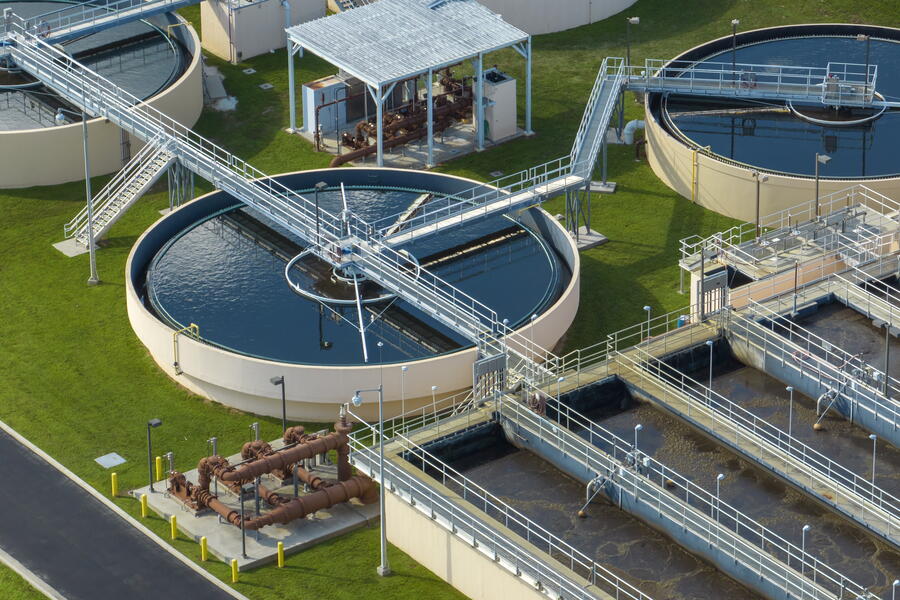
This is where reclaimed water comes into play, i.e. treated wastewater that, after receiving additional treatment, can be reused in various areas, thus transforming the traditional linear water cycle into one more in line with the circular economy.
To understand the true dimensions of this reality, we talk today to Tomás Serafín Cuesta García, lecturer in Agroforestry Engineering at Campus Terra and member of the Projects and Planning Research Group (PROePLA).
His knowledge of wastewater management in rural areas, irrigation planning and water governance allows us to draw, in this interview, a very enlightening picture of the present and future of our territory.
-Your research work focuses on water resource management, with special attention to wastewater in rural areas. What advances or solutions do you consider most relevant to improving water sustainability in these environments?
-We currently have very powerful tools at our disposal, particularly in two areas: automation and sensorisation, and artificial intelligence. All the mechanisms we have for water resource management can be optimised with tools that were unthinkable 10 years ago.
Automation enables us to access real-time data and use algorithms to support decision-making.
Similarly, we are also experiencing a change in mentality and in legislative use. Right now, something really interesting is that we can use reclaimed water. Let me give you an example.
The normal water consumption cycle begins with its collection, for example, from a river, at the cost of consuming energy. It is purified and pressurised, at the cost of consuming energy, so it can be used in homes or industry. What happens to that water? It becomes dirty and is returned to the river after treatment, as that water is generally not suitable for reuse. However, legislation now allows this reclaimed water to be used, for example, for road irrigation, park and garden irrigation, and certain industrial crop irrigation.
Reclaimed water represents a very promising future not only in the south but also here in the north, given a clear scenario of climate change in which rainfall is becoming increasingly irregular, both in time and space.
-The planning of irrigable areas and water governance are key issues today. How can university research contribute to a more efficient and equitable management of this essential resource?
-In Galicia, we have a very strange relationship with water because we have always had a lot of it. In fact, we have always seen water and smallholdings as problems when in reality they are a source of wealth.
We have always irrigated, but we may not know how to irrigate in Galicia. In other words, we irrigate using different criteria, providing supplementary irrigation. And now we have to irrigate differently.
All our most profitable crops, such as vines, are being irrigated. We are already experimenting with drip irrigation for maize. We are in a race to irrigate with less water and more efficiently, because water is already beginning to cost money and represents a significant share of the product's price per kilo.
What can we do? Contribute knowledge. The university has an obligation to work hand in hand with society and producers to provide irrigation techniques adapted to our reality. We cannot irrigate as they do in Almería, nor do we want to.
-Throughout your career, you have published numerous articles in prestigious international journals. What lines of research do you consider most promising in the field of agroforestry engineering in the coming years?
-Right now, regardless of our training, we all face a shared challenge: climate change.
As an agricultural engineer, I see major challenges linked to climate change and the organisation of the rural world. We cannot allow our rural areas to die. Who is going to maintain the meadows, for example, along the Camino de Santiago when the beef producers retire? We cannot depend on brigades for everything.
Furthermore, when they are hired, it is usually too late. There is a technical field of work here to give meaning to the rural world, which is currently somewhat disjointed.
Climate change, for its part, poses an immense challenge for future generations, especially for food security. We live in a rapidly changing globalised world. We need certain elements or factors secured; we cannot rely so much on energy or food imports, for example.
-For almost two decades, you held various university management positions, including the directorship of the Higher Polytechnic Engineering School. What lessons would you highlight from that period, and how do you assess the evolution of the Campus Terra?
-Personally, I came from a private company. And joining an institution where I could participate in governance and have a say in a departmental council surprised me greatly.
I believe that, in these positions of responsibility, I always acted with a sense of duty towards society, which is ultimately what finances us. I always say the same thing: I get paid, you pay. I have a duty to ensure that, at the end of the month, what I have done is useful.
The University of Santiago de Compostela, and specifically the Campus Terra, are deeply rooted in the region, which allows us to respond to local problems without ever losing sight of the direction the rest of the world is taking.
-In addition to your teaching and research work, you are actively involved in evaluating university quality in Spain and Portugal. How important is this task for strengthening the university system?
-Quality entered Spain, both in companies and institutions, in a somewhat forced manner, with quality plans that were unintelligible and very baroque, very bureaucratic. But today it is mandatory in our culture: I may do things well or believe I do, but there must be procedures in place so that it is recorded and someone can evaluate whether I am really doing things well.
I can even detect what I am not doing well and that I must implement certain mechanisms to ensure the proper fulfilment of these functions.
Today, quality is a fundamental requirement for all public universities, but not so much for private universities. And that needs to be said. In addition, we are examined every four years for degrees and every two years for master's degrees. And it is a path that cannot be reversed: we are a public institution, and we have to account for what we do, down to the last euro and the last hour spent in the office.
-In your opinion, what role should the university —and in particular the Campus Terra— play in the transfer of knowledge to the productive sector and sustainable rural development?
The university has to provide training so that you can work in Estonia, China or France, as well as broaden your horizons so that you can be critical of knowledge.
Knowledge is not what it used to be. I used to come to class and tell the students things they didn't know, as they had difficulty accessing that knowledge. Nowadays, students are very well connected at all times: they come to class with their laptops and tablets and can find out the formulas, procedures or training I am talking about in real time.
We have to give them something else: we have to convey knowledge in a different way; we have to provide students with the ability to do something more with what they have learned. And the specialisation of Campus Terra allows the university, in its universal function, to not forget the region and to offer training and degrees tailored to the needs of our society.
For example, we are currently working on a project to irrigate with reclaimed water from treatment plants, which is being coordinated from here in Lugo, but we have partners in Catalonia, Murcia and Italy. But the coordination is done from here because we have the knowledge and interaction that allowed us to ‘break down the doors’ in the offices of the different centres and unify much more ambitious projects.
-As you suggest, it seems to be a competitive advantage for Campus Terra, doesn't it? Both at the institutional and social levels, and even within the local business community itself...
Exactly. I wouldn't dare to say exactly how much was raised this past year, but I can say that the money raised from Campus Terra is a very significant amount, which allows us to develop projects and train doctoral students, among many other things.
-You teach a wide variety of degrees, from agricultural and agri-food engineering to civil engineering. What added value do you think this cross-disciplinary approach brings to Campus Terra students' education?
-It's wonderful to be able to offer two or more degrees. That is probably our most important advantage. Cross-disciplinarity allows us to have a holistic view, in our case, of the rural world. I don't see it only from my agricultural production perspective, but I can see it from a more comprehensive perspective.
For example, working in Robotics allows us to provide a lot of resources to the entire campus, resources that transcend other degrees and enable us to leverage different disciplines to enrich our students' education.
-As coordinator of the Master's Degree in Agricultural Engineering, what are the main challenges and objectives of this degree in the current context of the agri-food and environmental sector for the coming years?
-This degree is designed for the future, to provide holistic, joint responses to highly complex problems. And I am particularly proud that, here at our small school, we are number 1 in the BBVA ranking of agricultural degrees in Spain, for example.
In other words, the claim that the quality of our degrees is very high is supported, but we face the challenge of modernising the curriculum, which is hampered by the fact that, as a qualifying profession, it is established by the Ministry. So, I would say we have work to do in that regard: we should update the curriculum to keep us at the forefront of technical training.